Balsamic Glazed Beetroot Recipe
Introduction
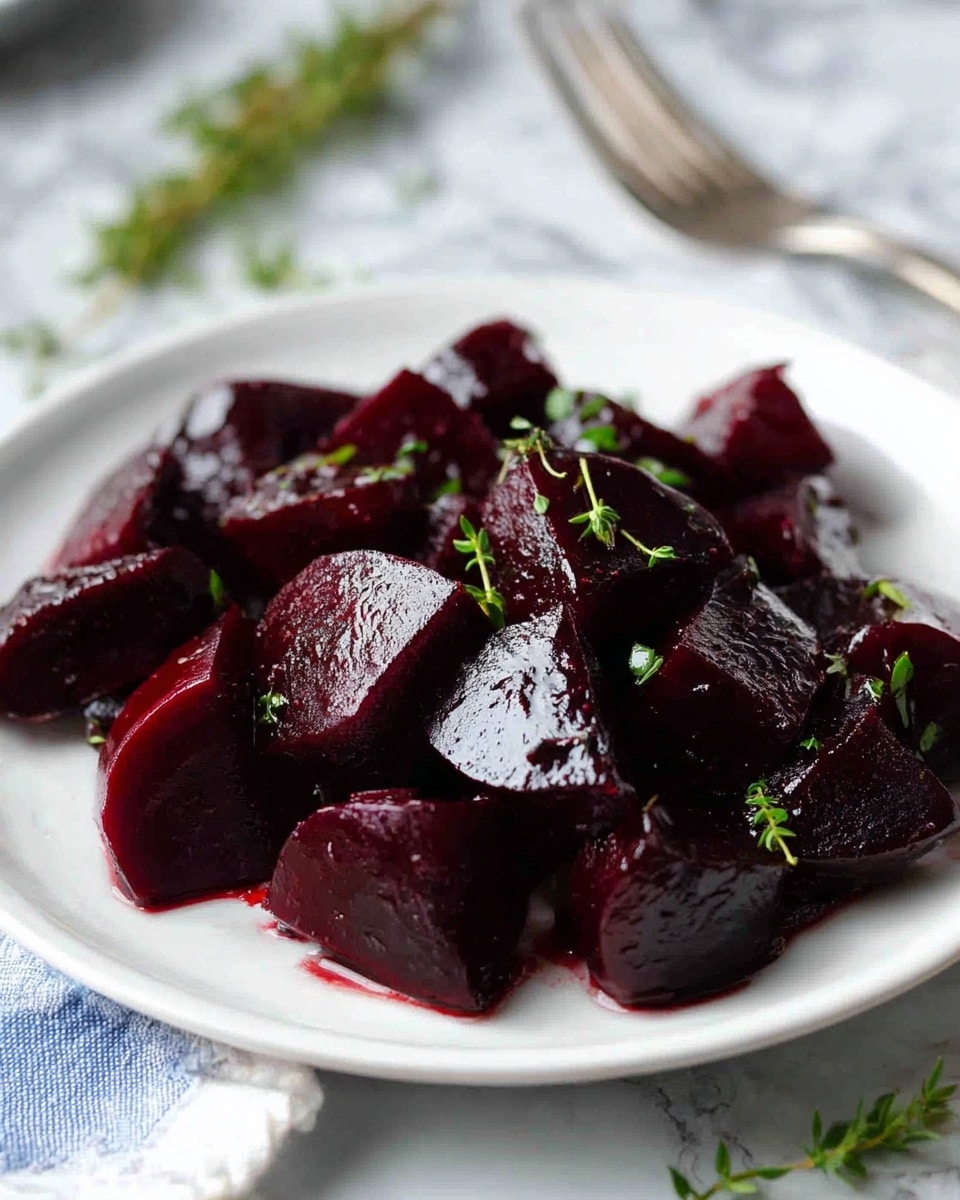
Balsamic Glazed Beetroot is a simple, flavorful side dish that brings out the natural sweetness of beets with a rich, tangy glaze. Perfect for adding a touch of elegance to any meal, this recipe works well with fresh or canned baby beetroots.
Ingredients
- 450 g (15 oz) can drained baby beetroot or about 10 fresh baby beetroot
- 1/2 cup balsamic vinegar
- 3 tbsp brown sugar
- 1 tsp thyme leaves (optional)
Instructions
- Step 1: To cook fresh beetroot, bring a pot of water to a boil. Add the beetroots and cook for 10 minutes until tender.
- Step 2: Drain the beetroot and let cool enough to handle. Peel off the skin using a teaspoon or vegetable peeler.
- Step 3: In a small frying pan or saucepan over medium-high heat, combine the balsamic vinegar and brown sugar.
- Step 4: Bring to a simmer and cook, stirring frequently, for 3 to 5 minutes until the mixture thickens and becomes syrupy. Remove from heat.
- Step 5: Cut larger beetroots into bite-size pieces, halving or quartering as needed.
- Step 6: Toss the beetroot pieces in the balsamic glaze and sprinkle with thyme leaves if using.
- Step 7: Serve the glazed beetroot slightly warm or at room temperature.
Tips & Variations
- Use fresh thyme or rosemary instead of dried for a more aromatic touch.
- If fresh beetroot is unavailable, canned baby beetroot is a convenient alternative that works well.
- Add a splash of orange juice to the glaze for a citrusy twist.
Storage
Store any leftovers in an airtight container in the refrigerator for up to 3 days. Reheat gently in a saucepan over low heat or enjoy cold as a salad topping.
How to Serve
Serve this delicious recipe with your favorite sides.
FAQs
Can I prepare this dish ahead of time?
Yes, the glazed beetroot can be made a day in advance and kept refrigerated. The flavors meld nicely when rested, making it a great make-ahead side.
What if I don’t have balsamic vinegar?
You can substitute with red wine vinegar mixed with a little honey or sugar to mimic the sweet and tangy profile of balsamic vinegar.