
Beginner Sourdough Bread Recipe
Introduction
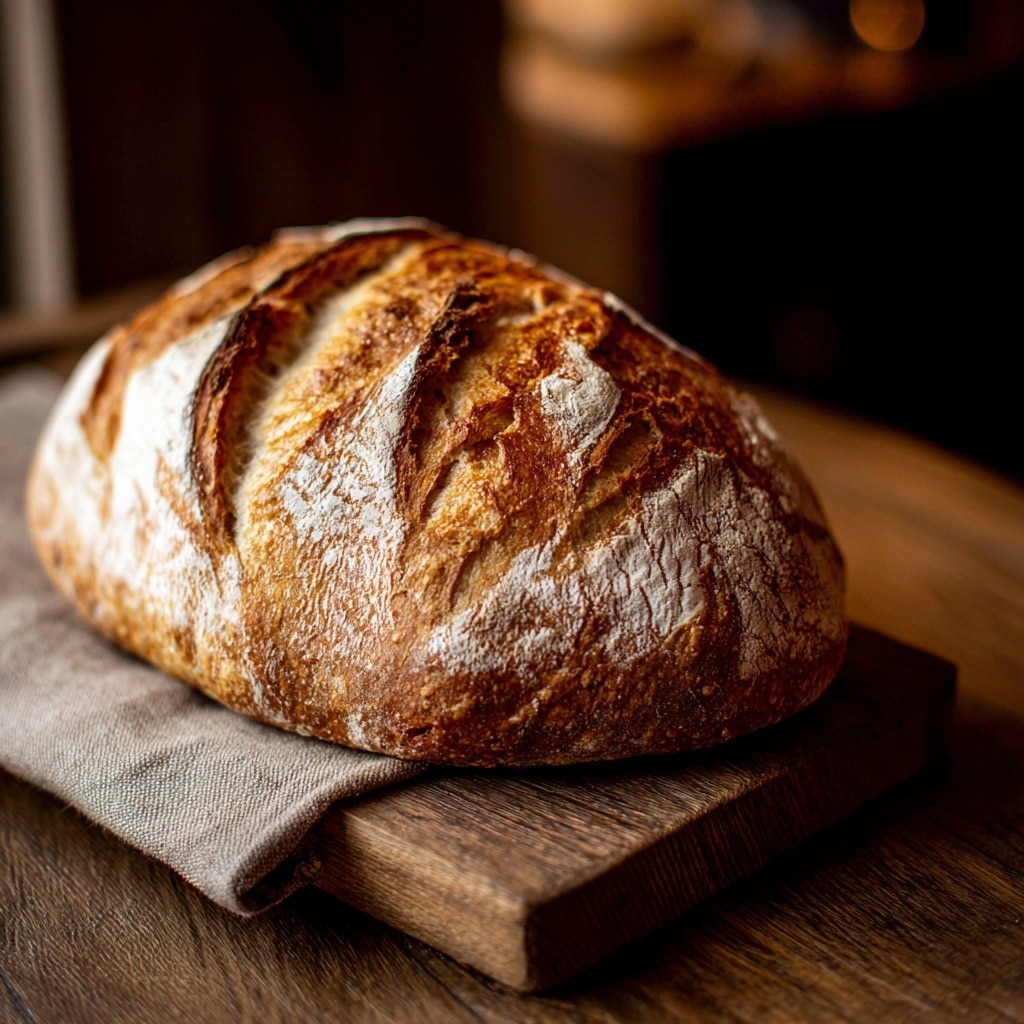
Sourdough bread is a rewarding project for any home baker, especially beginners. This recipe guides you through a simple method to create a flavorful, crusty loaf with a tender crumb using a natural starter.
Ingredients
- 80 grams ripe sourdough starter (about 1/3 cup)
- 80 grams water (warm or cool depending on the temperature, 1/3 cup)
- 80 grams all-purpose flour (about 2/3 cup)
- 230 grams levain or sourdough starter (about 1 cup)
- 400 grams water, room temperature (about 1 3/4 cups)
- 600 grams bread flour or all-purpose flour (about 4 1/2 cups)
- 12 grams salt (about 2 teaspoons)
Instructions
- Step 1: Mix the levain by combining 80 grams of starter, 80 grams of water, and 80 grams of flour in a clear container. Cover and let it sit at room temperature (78-80ºF) for 3-4 hours until bubbly and doubled in size. If you have a ripe, bubbly starter, you can skip this step and use it directly in place of the levain.
- Step 2: In a large bowl, mix 230 grams of levain, 400 grams room temperature water, 600 grams flour, and 12 grams salt using a wooden spoon or dough whisk. The dough will look shaggy but continue mixing until it forms a rough ball. Cover the bowl and rest for 1 hour at 78-80ºF.
- Step 3: Perform the first set of stretch and folds: uncover the dough, pick up the underside, and fold it over the top. Turn the bowl and repeat this three times total. Cover and rest for another hour at 78-80ºF.
- Step 4: Repeat the stretch and fold process two more times, with 1 hour rests between each session. By the final fold, the dough should become smoother, more elastic, and less shaggy.
- Step 5: After the last fold, let the dough rest covered for 1-2 hours at 78-80ºF. The dough should have risen about 40%, develop bubbles, pull away from the sides, and feel elastic. If not, let it ferment another 30 minutes and check again.
- Step 6: Cover the bowl with plastic wrap or a lid and place it in the refrigerator overnight. The dough can rest there for 12 to 48 hours. If baking the same day, see recipe notes for adjustments.
- Step 7: When ready to bake, preheat your oven to 500ºF with a Dutch oven inside for 30 minutes to get it very hot.
- Step 8: Remove the dough from the fridge and place it onto a piece of parchment paper. Shape it gently into a round ball, using wet hands if sticky. The dough will be easier to handle while cold.
- Step 9: Score the top of the dough with a sharp knife, making one or two simple slashes.
- Step 10: Carefully remove the hot Dutch oven from the oven with oven mitts. Place the dough with the parchment paper inside, cover with the lid, and return it to the oven. Immediately reduce the temperature to 450ºF and bake for 25 minutes.
- Step 11: Remove the lid and bake for an additional 20 minutes until the crust is golden and the internal temperature reaches 205ºF.
- Step 12: Take the bread out of the oven and let it cool completely before slicing. Enjoy your homemade sourdough!
Tips & Variations
- Use bread flour for a chewier texture, or all-purpose flour for a softer crumb.
- Maintain dough temperature between 78-80ºF to encourage proper fermentation.
- If you prefer a same-day bake, shorten the bulk fermentation and proceed with shaping after the dough has risen about 50%.
- Experiment with adding herbs or seeds to the dough for extra flavor.
Storage
Store leftover bread in a paper bag at room temperature for up to 2 days to keep the crust crisp. For longer storage, freeze the loaf wrapped tightly in plastic and foil for up to 3 months. Reheat frozen bread in a 350ºF oven for 10-15 minutes to refresh the crust.
How to Serve
Serve this delicious recipe with your favorite sides.
FAQs
Can I use all-purpose flour instead of bread flour?
Yes, you can use all-purpose flour though the bread will have a slightly softer crust and crumb. Bread flour provides more gluten, making for a chewier texture.
How do I know when my levain is ready?
Your levain is ready when it has doubled in size, is bubbly, and just about to collapse. It should have a pleasant, slightly tangy aroma. This usually takes 3-4 hours at 78-80ºF.